2026 Nissan Rogue: How Winter Driving Systems Keep You Safe
The Nissan Rogue is engineered for Canadian winter driving through the integration of Intelligent All-Wheel Drive, Intelligent Trace Control, Intelligent Engine Brake, Active Ride Control, Vehicle Dynamic Control, Traction Control System, Anti-lock Braking System, advanced visibility technologies and cold-weather comfort features. These systems continuously exchange information to help maintain traction, improve stability, enhance visibility and […]
The Nissan Rogue is engineered for Canadian winter driving through the integration of Intelligent All-Wheel Drive, Intelligent Trace Control, Intelligent Engine Brake, Active Ride Control, Vehicle Dynamic Control, Traction Control System, Anti-lock Braking System, advanced visibility technologies and cold-weather comfort features. These systems continuously exchange information to help maintain traction, improve stability, enhance visibility and support driver confidence on snow-covered, icy and low-friction roads. Their effectiveness is further supported by proper seasonal maintenance and the use of appropriate winter tires.

Nissan Rogue Winter Engineering
The Nissan Rogue approaches winter driving through an integrated vehicle management system rather than relying on all-wheel drive alone.
Canadian winters expose vehicles to rapidly changing road conditions, including packed snow, black ice, slush, freezing rain and fluctuating temperatures. The Rogue is designed to respond to these conditions by coordinating multiple electronic and mechanical systems that continuously monitor both the road surface and driver inputs.
Electronic control modules receive information from numerous sensors that monitor:
- Individual wheel speed
- Steering angle
- Accelerator position
- Brake pressure
- Vehicle speed
- Yaw rate
- Lateral acceleration
These inputs allow the vehicle to determine whether traction is changing and whether corrective action is necessary.
Instead of functioning independently, the drivetrain, braking system and stability technologies communicate continuously. This integrated approach enables the Rogue to respond quickly to changing levels of available grip while maintaining smooth and predictable vehicle behaviour.
All-Wheel Drive and Traction Control
The available Intelligent All-Wheel Drive system continuously adjusts torque distribution while working alongside electronic stability and traction technologies.
Winter traction depends on more than simply powering all four wheels. The Rogue combines drivetrain management with electronic control systems that help maximize available tire grip.
Intelligent All-Wheel Drive
Available Intelligent All-Wheel Drive continuously monitors road conditions and driver inputs to determine how engine torque should be distributed between the front and rear axles.
During normal dry-road operation, the system primarily powers the front wheels to improve efficiency.
When sensors detect conditions such as:
- Front wheel slip
- Snow-covered pavement
- Wet roads
- Ice
- Rapid acceleration
- Loose gravel
the system can automatically transfer additional torque to the rear wheels.
This transition occurs without driver intervention and continuously adapts as road conditions change.
Unlike traditional four-wheel-drive systems that require manual engagement, Intelligent All-Wheel Drive automatically responds whenever additional traction is beneficial.
Drive Mode Selector
Depending on trim level, the Canadian-market Rogue offers multiple drive modes that adjust vehicle responses for different road conditions.
Available modes may include settings designed for:
- Snow
- Auto
- Eco
- Sport
- Off-road conditions where applicable
Snow Mode modifies throttle response and all-wheel drive operation to promote smoother acceleration on slippery surfaces while helping reduce wheel spin.
Vehicle Dynamic Control
Vehicle Dynamic Control continuously compares the driver’s steering input with the vehicle’s actual direction of travel.
If the system detects understeer or oversteer, it can selectively:
- Reduce engine output
- Apply braking to individual wheels
- Help stabilize vehicle direction
These adjustments occur within fractions of a second while the driver maintains steering control.
Traction Control System
Traction Control System focuses specifically on preventing excessive wheel spin during acceleration.
If one or more wheels begin rotating faster than available traction permits, the system can reduce engine torque and selectively apply braking to improve grip.
This is particularly valuable when starting from icy intersections or climbing snow-covered inclines.
Intelligent Trace Control
Intelligent Trace Control enhances cornering stability by applying subtle braking to individual wheels during turns.
These small corrections help the Rogue follow the driver’s intended steering path more smoothly, especially when road surfaces provide inconsistent traction.
Intelligent Engine Brake
Intelligent Engine Brake supplements traditional braking by automatically increasing engine braking under certain deceleration conditions.
This helps provide smoother speed control during downhill winter driving while reducing reliance on the brake pedal.
Active Ride Control
Active Ride Control makes small braking and engine torque adjustments to help reduce body motion when driving over uneven winter road surfaces.
This contributes to improved ride stability on snow-covered or frost-damaged pavement.
Visibility and Cabin Comfort Features
Winter driving depends on maintaining clear visibility while ensuring occupants remain comfortable in freezing temperatures.
The Rogue integrates several systems that support driver awareness throughout Canadian winters.
Automatic Climate Control
Automatic climate control continuously regulates cabin temperature by adjusting:
- Heating output
- Air distribution
- Fan speed
- Air conditioning operation when appropriate
Maintaining a stable cabin temperature also supports effective windshield defogging.
Front Defroster
The windshield defroster directs heated airflow across the windshield to remove:
- Frost
- Ice residue
- Interior condensation
Rapid clearing improves visibility during cold starts.
Rear Window Defroster
Heating elements embedded within the rear window help remove frost and moisture, improving rearward visibility without requiring manual scraping inside the vehicle.
Heated Exterior Mirrors
Available heated mirrors reduce frost and ice accumulation on mirror surfaces.
Maintaining clear side mirror visibility supports safer lane changes and highway driving.
Heated Seats and Heated Steering Wheel
Available heated front seats and a heated steering wheel improve occupant comfort during Canadian winters by warming frequently contacted surfaces more quickly than the cabin air alone.
LED Exterior Lighting
LED headlights provide consistent illumination during:
- Snowfall
- Early winter sunsets
- Fog
- Low-light conditions
Improved lighting helps drivers identify changing road conditions more effectively.
Around View® Monitor
Available Intelligent Around View® Monitor combines images from multiple exterior cameras to assist with parking and low-speed manoeuvring.
Although snow accumulation may temporarily obscure camera views, the system provides valuable assistance whenever cameras remain unobstructed.
Tire Selection and Seasonal Maintenance
Winter tires and seasonal maintenance allow the Rogue electronic systems to perform at their highest potential.
Even advanced all-wheel drive systems depend on adequate tire grip.
Winter Tires
Winter tires use rubber compounds designed to remain flexible in low temperatures.
Compared with all-season tires, they generally improve:
- Snow traction
- Ice traction
- Cold-weather braking
- Cornering stability
Improved tire grip enhances the effectiveness of:
- Intelligent All-Wheel Drive
- Vehicle Dynamic Control
- Traction Control System
- Anti-lock Braking System
Tire Pressure
Cold temperatures naturally reduce tire pressure.
Maintaining recommended tire pressures supports:
- Steering response
- Braking stability
- Tire wear
- Ride quality
Proper inflation also helps electronic stability systems calculate vehicle behaviour accurately.
Battery Inspection
Battery output decreases as temperatures fall.
Routine inspections before winter help verify:
- Battery condition
- Charging performance
- Terminal cleanliness
- Electrical system operation
Reliable battery performance is essential for cold-weather starting.
Windshield Washer Fluid
Using washer fluid formulated for freezing temperatures helps maintain visibility while removing road salt, slush and snow spray.
Brake Inspection
Winter driving places additional demands on braking components.
Regular inspections should evaluate:
- Brake pads
- Rotors
- Brake fluid
- Brake lines
Maintaining the braking system also supports the operation of stability and traction technologies.
Canadian Winter Ownership Tips
Preparing the Rogue for winter involves maintaining both mechanical systems and electronic driver assistance technologies.
Seasonal preparation should include regular inspection of:
- Tires
- Battery
- Cooling system
- Windshield wipers
- Washer fluid
- Exterior lighting
- Brake system
Because the Rogue incorporates multiple camera- and sensor-based technologies, owners should also keep:
- Camera lenses
- Radar sensor areas
- Exterior lighting
- Front grille
- Windshield
free from snow, ice and excessive road salt accumulation.
Underbody washing throughout winter helps remove road salt from suspension components, brake hardware and chassis surfaces, reducing long-term corrosion exposure.
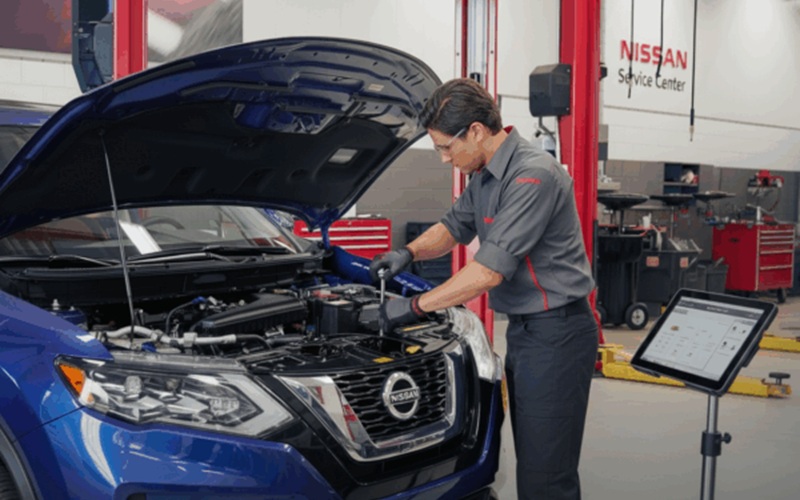
At Cochrane Nissan, owners can also receive guidance on seasonal inspections appropriate for Canadian winter conditions.
2026 Nissan Rogue: Modern Safety
The Nissan Rogue combines Intelligent All-Wheel Drive, Vehicle Dynamic Control, Intelligent Trace Control, Intelligent Engine Brake, Active Ride Control, advanced visibility technologies and cold-weather comfort features into an integrated system designed specifically for changing Canadian winter conditions. Rather than depending on a single technology, these systems continuously exchange information to optimize traction, stability and driver awareness across snow-covered, icy and wet roads.
When paired with winter tires, regular seasonal maintenance and attentive driving, the Rogue winter-focused engineering helps support confident year-round operation throughout Canada. Understanding how these technologies interact allows owners to make the most of the vehicle’s capabilities while recognizing that safe winter driving always depends on both vehicle performance and responsible driver control.
2026 Nissan Rogue FAQ
1. Does Intelligent All-Wheel Drive stay engaged all the time?
No. The system continuously monitors road conditions and automatically adjusts torque distribution between the front and rear wheels only when additional traction is required.
2. Are winter tires still recommended on AWD Rogue models?
Yes. Winter tires provide additional traction during cold-weather driving, allowing the all-wheel drive system and electronic stability technologies to perform more effectively.
3. How does Vehicle Dynamic Control help during winter?
Vehicle Dynamic Control monitors vehicle movement and can selectively reduce engine power or apply braking to individual wheels if it detects understeer or oversteer on slippery surfaces.
4. Can snow affect the Around View® Monitor and other driver assistance systems?
Yes. Snow, ice and road salt can temporarily obstruct cameras and sensors, reducing the effectiveness of certain visibility and driver assistance technologies until they are cleaned.
5. Why is tire pressure important during Canadian winters?
Cold temperatures naturally reduce tire pressure. Maintaining the recommended pressure helps preserve braking performance, steering response, tire wear and the effectiveness of the Nissan Rogue electronic traction and stability systems.
Disclaimer: Content contained in this post is for informational purposes only and may include features and options from US or internacional models. Please contact the dealership for more information or to confirm vehicle, feature availability.