Smoke From Under the Hood: Should I Visit a Nissan Service Center?
If you see smoke or what looks like steam coming from under the hood of your Nissan, you probably want to know two things: what is causing it, and whether you should head to a Nissan service center. The answer depends on what you see and smell, whether the engine temperature has climbed, and whether […]
If you see smoke or what looks like steam coming from under the hood of your Nissan, you probably want to know two things: what is causing it, and whether you should head to a Nissan service center.
The answer depends on what you see and smell, whether the engine temperature has climbed, and whether you notice a fluid leak or warning light. Oil, coolant and electrical problems can all create smoke or vapour under the hood, so appearance alone usually won’t tell you exactly what went wrong. If you can’t safely identify the source, have a qualified technician inspect the vehicle.
What Could Cause Smoke From Under the Hood?
Several problems can create smoke or vapour in the engine compartment. One important distinction is whether you see steam from coolant or actual smoke from a substance that has reached a hot component.
Possible causes include:
- Engine oil leaking onto a hot engine or exhaust component
- Coolant leaking onto a hot surface
- Steam from an overheating cooling system
- Fluid spilled during recent maintenance
- An electrical or wiring problem
- Another fluid leak within the engine compartment
A technician may check the engine oil, coolant, brake fluid, cooling-system hoses, heater and air-conditioning hoses, radiator and drive belts while looking for the source.
Is It Smoke or Steam?
This is one of the first things to consider.
- Steam often appears when coolant or water reaches a hot surface. It may look white and disappear relatively quickly.
- Smoke from oil or another substance that reaches a hot component may look different and often produces a noticeable smell.
However, don’t rely on colour or smell alone to diagnose the problem. If the engine overheats and you see steam or coolant escaping, avoid opening the hood further until the vehicle has cooled. Hot coolant and steam can cause serious burns.
Could an Oil Leak Cause Smoke?
Engine oil can create smoke when it leaks onto a hot engine or exhaust component. A small leak may cause occasional smoke, while a larger leak can produce a much more noticeable amount. However, the amount of smoke doesn’t necessarily tell you where the leak started. If you notice an oil smell, a low oil level or visible oil around the engine compartment along with the smoke, have the vehicle inspected.
Pay particular attention to the oil-pressure warning light. Low oil pressure and a low oil level aren’t necessarily the same problem. If the oil-pressure warning light comes on while the engine runs, stop the engine rather than continuing to drive. Smoke combined with an oil-pressure warning needs prompt attention.
Could Coolant Cause Smoke or Steam?
Yes. Coolant carries heat away from the engine. If it leaks onto a hot component, it can create steam or vapour. A cooling-system problem can also raise engine temperature. If the engine overheats, stop in a safe location and watch for signs such as escaping steam or coolant. Don’t assume that steam under the hood is harmless condensation. The cooling system operates under high temperatures and pressure. Before you continue normal driving, determine what caused the steam.
Could Smoke Appear After Maintenance?
Yes, it can. During recent maintenance, a small amount of fluid could spill onto a hot component. As the engine heats up, that fluid may produce a temporary smell, smoke or vapour. However, don’t automatically assume recent service caused the smoke.
If the problem started after maintenance, tell the technician what work the vehicle received and when you first noticed the smoke. That information can help narrow down the possible source. If the smoke disappears quickly and doesn’t return, that’s useful information. It still doesn’t confirm what caused it, though.
What If There Is No Warning Light?
A Nissan can develop an under-hood problem without immediately triggering a dashboard warning light. Warning lights alert you when the vehicle detects specific monitored conditions. They don’t identify every possible fluid leak, electrical problem or source of smoke. For that reason, the absence of a warning light doesn’t mean you should ignore smoke from the engine compartment. If you can’t safely identify the source, have the vehicle inspected.
What If the Temperature Gauge Looks Normal?
A normal temperature reading is helpful, but it doesn’t rule out every problem. For example, oil can leak onto a hot component and create smoke without raising the engine temperature. A coolant leak may also start before the temperature gauge shows an overheating condition. Instead of focusing only on the temperature gauge, try to determine what is creating the smoke or vapour.
What Should You Do If You See Smoke?
If smoke starts coming from under the hood, keep your first steps simple.
1. Pull Over Safely
If you notice smoke while driving, find a safe place to stop the vehicle.
2. Check the Dashboard
Look for an engine-temperature, oil-pressure, charging-system or other warning light. If the oil-pressure warning light comes on, don’t continue driving.
3. Stay Clear of Hot Components
Don’t immediately reach into the engine compartment. If steam or coolant is escaping, components under the hood may be extremely hot. Avoid opening the hood further while steam or coolant continues to escape.
4. Pay Attention to What You See
If you can do so safely, make a note of:
- The colour of the smoke or vapour
- Any noticeable oil or fluid smell
- When the smoke appeared
- Whether the engine temperature changed
- Any warning lights on the dashboard
- Any visible fluid leaks
These details can give the technician useful clues when diagnosing the problem.
5. Have the Vehicle Inspected
If the smoke continues, returns or has no obvious explanation, have a Nissan service center or qualified repair facility inspect the vehicle.
When Should You Avoid Driving the Nissan?
Some symptoms mean you shouldn’t continue normal driving. Stop the vehicle in a safe location if the engine overheats, steam or coolant escapes from under the hood, or the oil-pressure warning light comes on.
Driving an engine with low oil pressure can cause serious engine damage. If you see an oil-pressure warning, shut off the engine when it’s safe to do so. An overheating engine also requires caution. Stop the vehicle and allow the cooling system to cool before anyone checks it.
Significant smoke or signs of an electrical problem also deserve prompt attention. Don’t keep driving just to see whether the problem goes away.
What Will a Nissan Service Center Check?
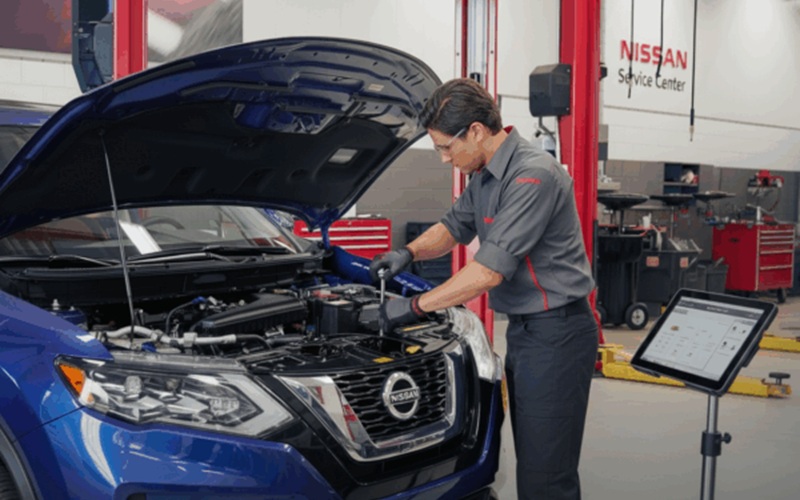
A technician can inspect the engine compartment, trace the source of the smoke and determine whether fluid has leaked onto a hot component.
Depending on the symptoms, the technician may check:
- Engine oil level and possible leaks
- Coolant level and cooling-system components
- Hoses and connections
- Radiator and related parts
- Drive belts
- Electrical components and wiring
- Warning lights and diagnostic information
The technician can then determine whether the vehicle is safe to drive or needs further testing or repairs.
The Bottom Line
If you see smoke from under the hood of your Nissan, don’t assume one specific problem caused it. Oil or coolant may have reached a hot component, the engine may be overheating, fluid may remain from recent maintenance, or another issue may have developed inside the engine compartment.
If you also notice an oil-pressure warning, overheating indication, or escaping steam or coolant, stop driving as soon as you can safely do so. These symptoms require more immediate attention.
If the cause isn’t obvious, a Nissan service center can inspect the vehicle and trace the smoke to its source. Once a technician knows where it comes from, they can check for overheating, fluid loss, electrical concerns or other problems and determine what the Nissan needs before it returns to normal operation.
Disclaimer: Content contained in this post is for informational purposes only and may include features and options from US or internacional models. Please contact the dealership for more information or to confirm vehicle, feature availability.